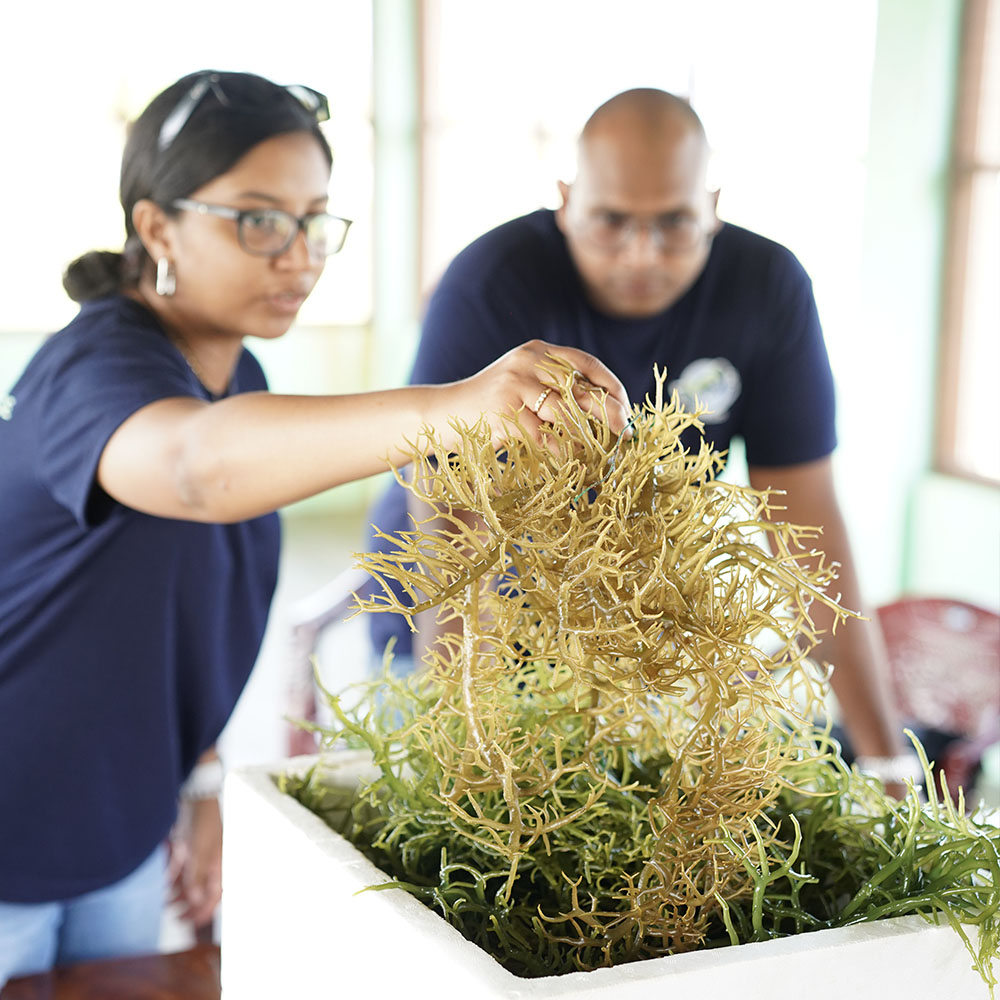
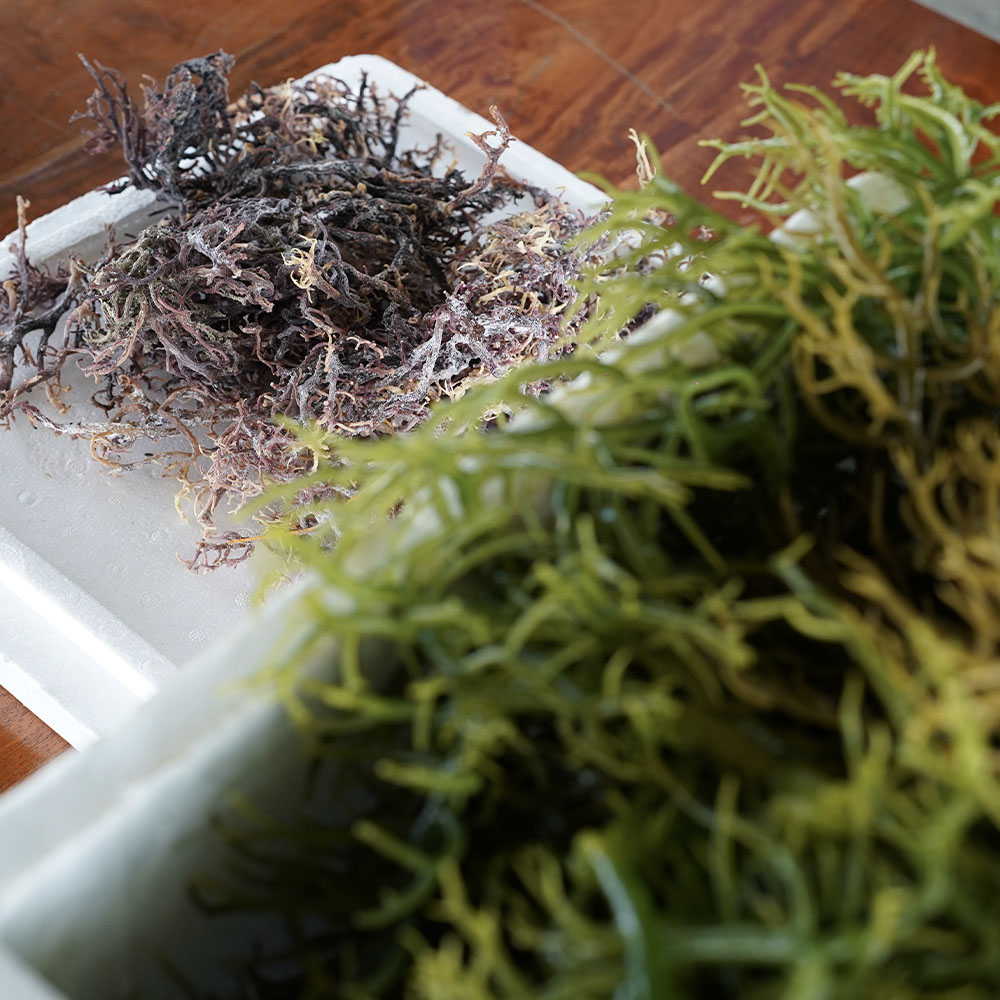
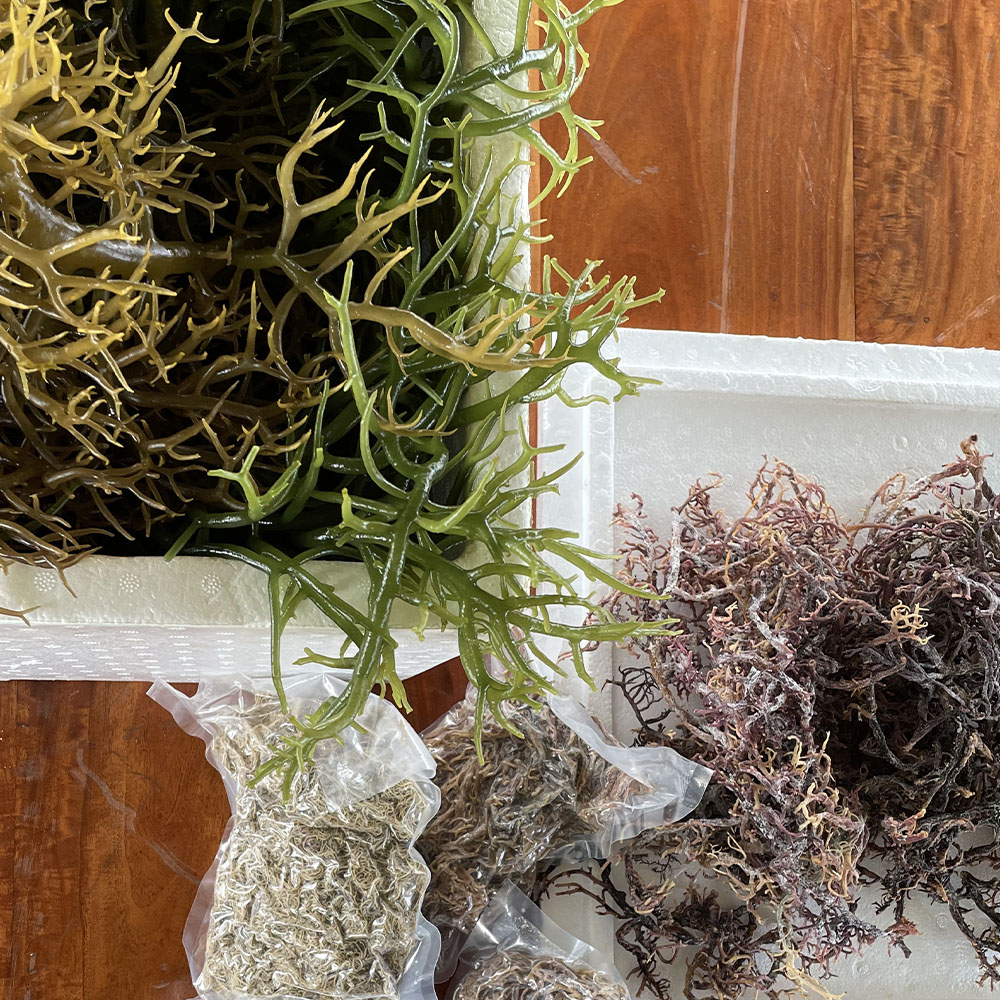
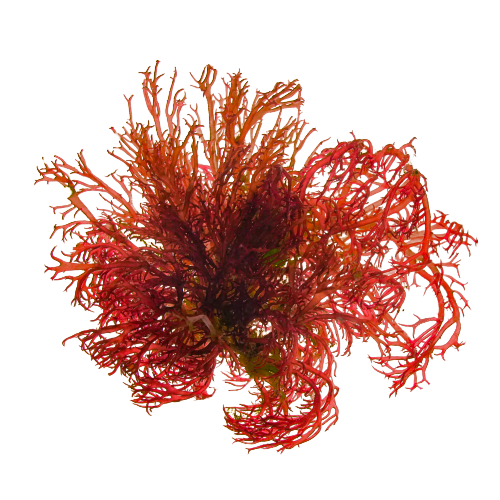
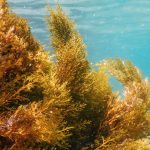
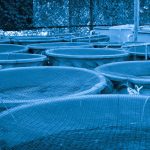
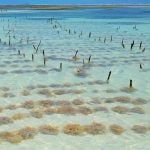
We cultivate two extraordinary varieties, Kappaphycus and Gracilaria, each with its unique qualities. Kappaphycus, versatile and fast-growing, finds its way into cosmetics, biofuels, and more. Meanwhile, Gracilaria, renowned for its rich agar content, serves the food and pharmaceutical industries. Our seaweed farming practices prioritize sustainability, benefiting both our products and the marine environment.
Why Seaweed?
Seaweed is a sustainable marvel with numerous benefits. Its fast growth and nutrient absorption aid marine ecosystems, countering issues like eutrophication. Its versatility benefits industries like food and biofuels, reducing reliance on finite resources. As an eco-friendly alternative, seaweed has the potential to transform agriculture, aquaculture, and renewable energy for a greener planet
Kappaphycus
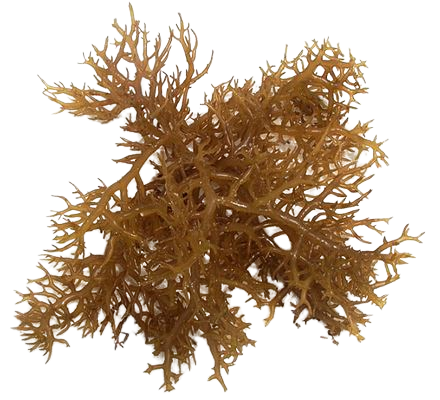
This remarkable red seaweed species stands as a symbol of resilience in our sustainable farming efforts. Thriving in diverse marine environments, its rapid growth and adaptability make it an ideal candidate for sustainable farming. With versatile applications ranging from cosmetics to biofuels, Kappaphycus is a resource driving innovation while contributing to a greener planet.
Gracilaria
This species stands at the forefront of our sustainable cultivation practices. Thriving in diverse aquatic environments, it’s celebrated for its rich agar content, a valuable resource with applications spanning from the culinary world to pharmaceuticals. Our commitment to responsible farming means that we harness the potential of Gracilaria while preserving marine ecosystems and supporting coastal communities.
Why Sri Lanka?
Sri Lanka’s pristine coastal stretches and favorable marine conditions make it an ideal destination for sustainable seaweed cultivation.
From the golden sands of Kalpitiya to the serene waters of Jaffna, the island offers a diverse range of coastal environments conducive to seaweed cultivation.
Various seaweed species, including Kappaphycus, Gracilaria, and sought-after red seaweed species, thrive in these coastal waters.
Sri Lanka’s unique geography and climate provide the perfect canvas for the mission of seaweed sustainability.
This enables the cultivation of all three types of seaweed while fostering eco-conscious growth in thriving coastal communities.
Source: Financial Times, YouTube
Versatile Applications of Seaweed
Human Food: Seaweed, with its rich nutritional profile and umami flavor, has been a culinary staple in various cuisines worldwide. It’s celebrated for its role in sushi, salads, and soups, adding a unique and healthy twist to everyday meals.
Animal Feed: Beyond human consumption, seaweed is a valuable ingredient in animal feed formulations. Its abundance of essential nutrients not only enhances the health and growth of livestock but also reduces the environmental impact of conventional feed sources.
Fertilizer: Seaweed extracts, teeming with growth-promoting compounds, serve as organic fertilizers for agriculture. They enrich soil health, improve crop yield, and reduce the need for chemical additives, contributing to more sustainable farming practices.
Environmental Benefits of Seaweed
Seaweed, often considered a simple aquatic plant, holds remarkable environmental significance. This humble marine resource offers a multitude of benefits to the environment. As we navigate the challenges of climate change and ecosystem preservation, understanding and harnessing the power of seaweed becomes increasingly vital. Let’s explore some of the key environmental advantages that seaweed provides:
Seaweed is a carbon-absorbing powerhouse. It soaks up carbon dioxide (CO2) from the atmosphere during growth, helping to mitigate climate change by reducing greenhouse gas levels.
Ocean Health
Seaweed acts as a natural purifier, absorbing excess nutrients and pollutants from the water, promoting healthier and more balanced marine ecosystems and reducing the harmful effects of ocean acidification.
Biodiversity Support
Seaweed beds provide habitat and food for various marine species, bolstering biodiversity and creating thriving underwater communities.
Coastal Protection
Seaweed’s extensive root systems help stabilize coastlines, reducing erosion and safeguarding vulnerable coastal communities.
Sustainable Aquaculture
Seaweed cultivation can coexist harmoniously with other forms of aquaculture, reducing environmental impacts and promoting sustainable seafood practices.
Reduced Land-Based Agriculture
Seaweed-based fertilizers and animal feed reduce the need for land-based agriculture, minimizing deforestation and water pollution.
Innovative Solutions
Seaweed innovations extend to plastic alternatives, biofuel production, and much more, reducing the ecological footprint of various industries.